

Three-Side Seal Pouches: Simple, Economical Packaging for Everyday Foods
Walk down the snack aisle and you will see them everywhere: flat pouches of dried fruit, single-dose sachets of instant coffee, seasoning packets folded inside noodle cups. Most are three-side seal pouches — two sheets of film welded on three edges, filled through the fourth, then sealed shut. They’re easy to overlook, and that’s exactly the point.
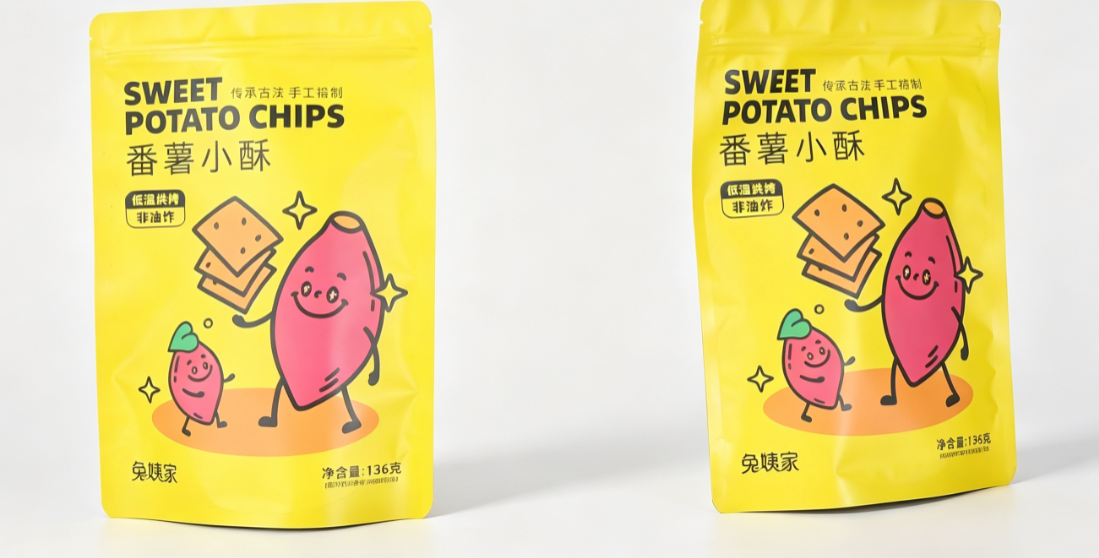
What Is a Three-Side Seal Pouch?
It’s a pre-formed pouch made from two sheets of flexible film, heat-sealed along the left, right and bottom edges so it opens like a pocket. Product goes in through the top, and the fourth seal is applied last — usually on the packer’s filling line, sometimes back at the factory when the order calls for pre-filled sachets. Seal widths of five to ten millimetres give the pouch its flat profile and its surprising strength.
Why It Is the Most Economical Pouch Format
Film is the biggest single cost in flexible packaging, and this design uses less of it per bag than almost any other. There are no gussets, shaped panels or reseal tapes — just two flat sheets and four straight seals. That simplicity carries through production too: simple heated bars seal fast, one machine set-up fits many sizes, and scrap stays low because the geometry is forgiving. For a packer buying in volume, the savings are fractions of a cent per pouch, which is where margins on everyday foods are won or lost.
When It Is the Right Choice
Choose this pouch when the product is flat or low-profile and meant to be finished in one sitting. It’s the natural home of single servings and sachets: nuts and trail mix, dried fruit, spices, instant coffee, sugar portions, confectionery and small pet treats. It also earns its keep as an inner pouch inside a retail carton, holding samples or sauce sachets that would otherwise rattle loose. And because the top seal happens after filling, you can change fill weights without reordering pouches — the same stock simply takes a different amount.
When It Is the Wrong Choice
Flat pouches are not the answer to every packaging question. If a bag must stand upright on a shelf, a stand-up pouch with a bottom gusset does that job far better. Heavy contents are another warning: five kilograms of rice will strain four thin seals no matter how well they are made. So will bulky items that leave dead space inside, because you pay for the same film while the pack looks half empty. Match the format to the product and it pays; force it, and the leakers and returned goods will tell you soon enough.
Choosing the Right Film Structure
Material choice follows shelf life. Plain polyethylene suits short-life products like bakery items that move within a day or two. For printed snack sachets needing a few months on shelf, OPP/PE lamination gives a crisp surface for graphics plus a dependable heat-seal layer. Moisture-sensitive powders — milk powder, instant drinks, effervescent tablets — call for foil or metallised film that keeps water vapour out. Sharp-edged contents such as tea stalks or coarse spice benefit from PA/PE, which resists puncturing. A good supplier recommends honestly: a structure that over-delivers costs you money, and one that under-delivers costs you customers.
Pillow Pouches versus Flat Three-Side Seal
People often confuse the two because they look similar on a shelf. A pillow pouch is formed continuously from a tube of film on a vertical form-fill-seal machine — the right tool for high-speed lines packing thousands of bags an hour. A three-side seal pouch is made flat in advance and supplied empty, to be filled later at whatever pace the packer needs. That makes it the sensible choice when filling is slow, semi-automatic or done by hand. It is also why test markets and private-label startups start here: a professional-looking pack without the investment in a full form-fill-seal line.
Print Area and Design Freedom
Designers like this format because the front and back panels are uninterrupted: no gusset to distort artwork, no curved surface to fight. A sharp logo, a readable ingredient panel and bold pricing all sit on flat, true-to-print areas. Both panels take full-colour print, giving brands two canvases — appetite appeal in front, compliance and storytelling behind. And because the pouch is sealed on all four edges in the end, print registers tightly to the seal line, which is harder to guarantee on a continuously formed pillow bag.
Why Buying from a Full-Line Factory Pays
When you buy from a manufacturer that prints, laminates and converts its own film, the savings stack up at every step. There is no trader’s margin between film maker and pouch maker, and no hand-off where quality control goes soft. At Dongguang Xingrui Plastics, film is printed and laminated in-house, then slit and converted into pouches before dispatch. Seal strength is checked against ASTM F1921 test methods; structures are chosen with EU food-contact rules such as Regulation 10/2011 in mind; and production runs under ISO 22000 food safety management. For high-volume buyers, the result is consistent seals, honest pricing and pouches that run cleanly on the filling line.
References
ASTM F1921/F1921M-18. Standard Test Method for Hot Seal Strength of Flexible Barrier Materials. ASTM.
EU Regulation 10/2011 on plastic materials and articles intended to come into contact with food. European Commission.
ISO 22000:2018. Food safety management systems — Requirements for any organization in the food chain. ISO.