

Custom Printed Flexible Packaging: From Artwork Design to Finished Bag
Put a plain bag next to a printed one on the same shelf and the plain one disappears. Shoppers decide in seconds, and most of that decision is visual. For a growing brand, custom printed flexible packaging is the quickest way to look like an established player. This walkthrough follows one artwork file from the designer's desk to finished bags on your pallet, and where buyers most often trip.
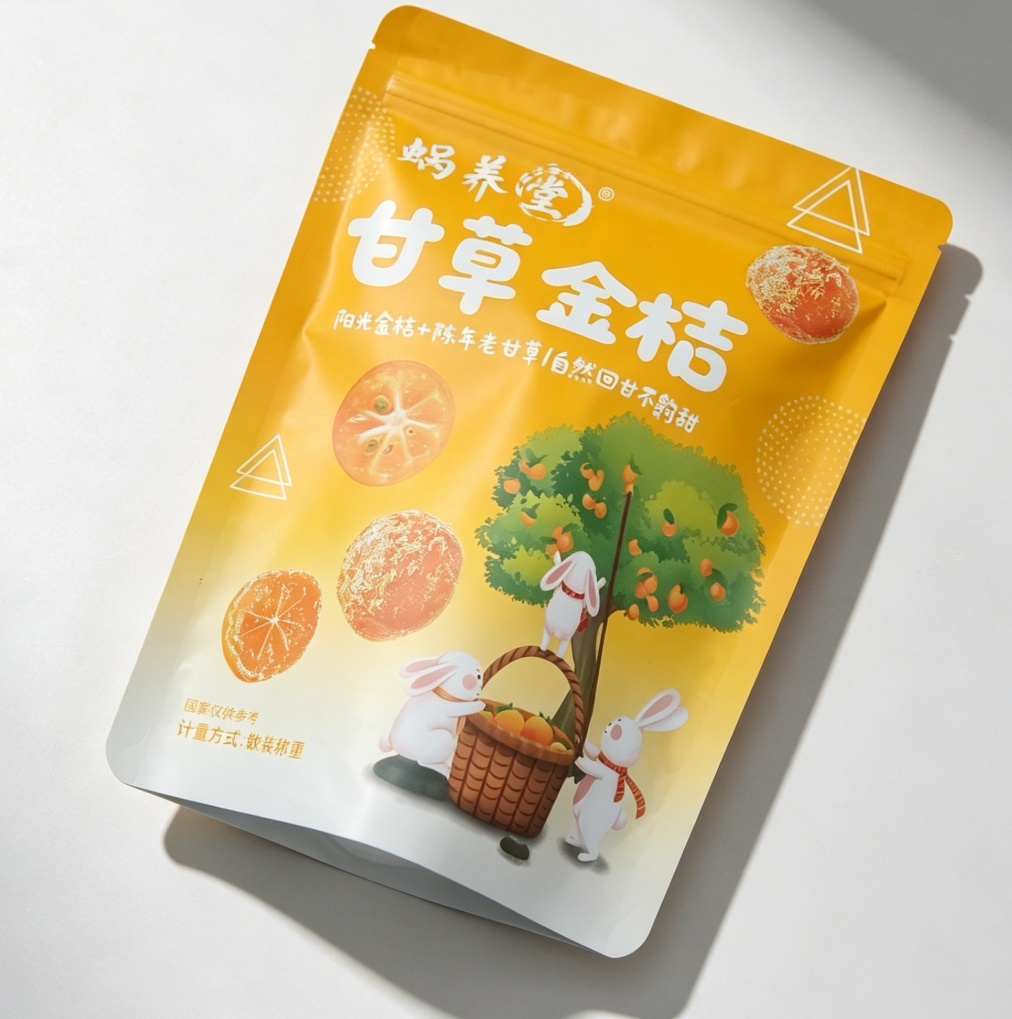
Why Custom Print Pays for Itself
Unprinted film and generic white bags tell the customer nothing. No brand name, no product story, no reason to pick this product over the one beside it. Worse, blank packaging quietly suggests the company cut corners on quality checks too. A printed bag carries your logo, your claims, your barcode, your contact details. It also makes the product harder to copy: anyone can buy stock bags off the shelf, but your printed design belongs to you. For a few extra cents per bag, printing turns a nameless commodity into a product with an owner. Retailers notice it too when they decide which brands earn shelf space.
Artwork Preparation: Fix the File Before the Plates Are Made
Most artwork faults are predictable and cheap to fix before plate making starts. Files arrive in the wrong color space, at low resolution, or with fonts the factory has never heard of. Screens display RGB; presses print CMYK, and the gap between them shows. Colors that glow on a phone can turn muddy once converted, so convert your own files first and look. Send artwork at 300 DPI at final size, minimum; 72 DPI images saved from a website print soft and blurry. Add 3 mm of bleed on every side so backgrounds run to the trimmed edge. Outline your fonts or embed them. A missing font gets swapped for something close, and the mismatch turns up on the proof, not in the file. Designers who check these four points rarely pay for a second set of plates.
Plates and Cylinders: Where Setup Money Goes
The two workhorses of film printing both cost money before they print a single bag. Flexography uses a separate photopolymer plate for each color, wrapped around the print rollers. Plates are quick to make and reasonably priced. Rotogravure engraves a metal cylinder for every color. Cylinders are expensive up front but hold their image over enormous runs, which pushes the cost per bag below flexo at high volume. Either way, each added color means another plate or cylinder and another setup charge. A five-color design simply costs more to start than a two-color one. Keeping the palette tight is not timid design; it is economics.
Minimum Order Quantities, Explained
Buyers often ask why they cannot order five hundred printed pouches. The honest answer is setup. Every color needs its own plate or cylinder. Plates must be mounted and registered on the press, and the machine has to be stopped, washed and re-inked between jobs. That labor costs about the same for five hundred bags as for fifty thousand. Most flexible packaging manufacturers in China hold a 3,000 to 5,000 piece minimum for custom print, partly to cover that setup and partly so film and ink can be purchased sensibly. If your volume really is small, ask about stock sizes with one- or two-color print. Many factories can bend their rules; none can bend press economics.
The Strike-Off: Approving a Sample Before Production
Before mass production, a serious supplier prints a strike-off, sometimes called a proof: a short run on the actual press showing the true colors, layout and finish. Judge it on paper, not on a monitor. Screens vary; what looks right in your office can sit several shades off on film. Hold the physical sample under shop lighting and by a window, then approve it in writing. The factory keeps the approved bag as a reference and matches the production run against it. Colors drift within normal tolerances on any run; the strike-off is the agreed benchmark for that conversation. Ask which tolerances your supplier prints to; many follow ISO 12647-2 for process control.
Surface Finishing: What the Bag Feels Like Matters
Printing lays down the image. Finishing decides how the bag feels, and feel drives perceived value. Gloss lamination gives colors a bright, juicy look that suits food photography. Matte lamination kills glare and reads quieter and more premium, though it shows fingerprints. Soft-touch lamination adds a velvety surface people notice the instant they pick the bag up. Spot UV varnishes only your logo against a matte field, so the mark lifts off the pack. Foil stamping adds metallic gold or silver, and embossing presses raised texture into the film. Every option shifts cost and lead time, so ask for physical finish samples first. Texture does not survive a photograph, and texture is the reason to pay for finishing at all.
One Roof Beats Ten Middlemen
When design support, prepress, plate making, printing and lamination sit under one factory roof, artwork travels a very short distance. Departments talk directly, and problems surface while they are still cheap to fix. Route the job through an agent or trading company and the instructions change hands several times; the designer's intent can quietly mutate before the cylinders are engraved. Dongguang Xingrui Plastics runs an integrated plant in Hebei's packaging belt, with in-house artwork support and printing. Customers deal with the engineers who will actually run their job. You still approve a physical strike-off before production, but fewer translators sit between your idea and the finished bag, and fewer surprises arrive with the cartons.
References
ISO 12647-2:2013. Process control for the production of half-tone colour separations, proof and production prints. ISO.
ASTM F2096-11. Standard Test Method for Determining Translucency of Paper and Board by Diffuse Reflectance. ASTM.
ISO 9001:2015. Quality management systems - Requirements. ISO.