

Spout Pouches for Liquid and Sauce Packaging
What a Spout Pouch Actually Is
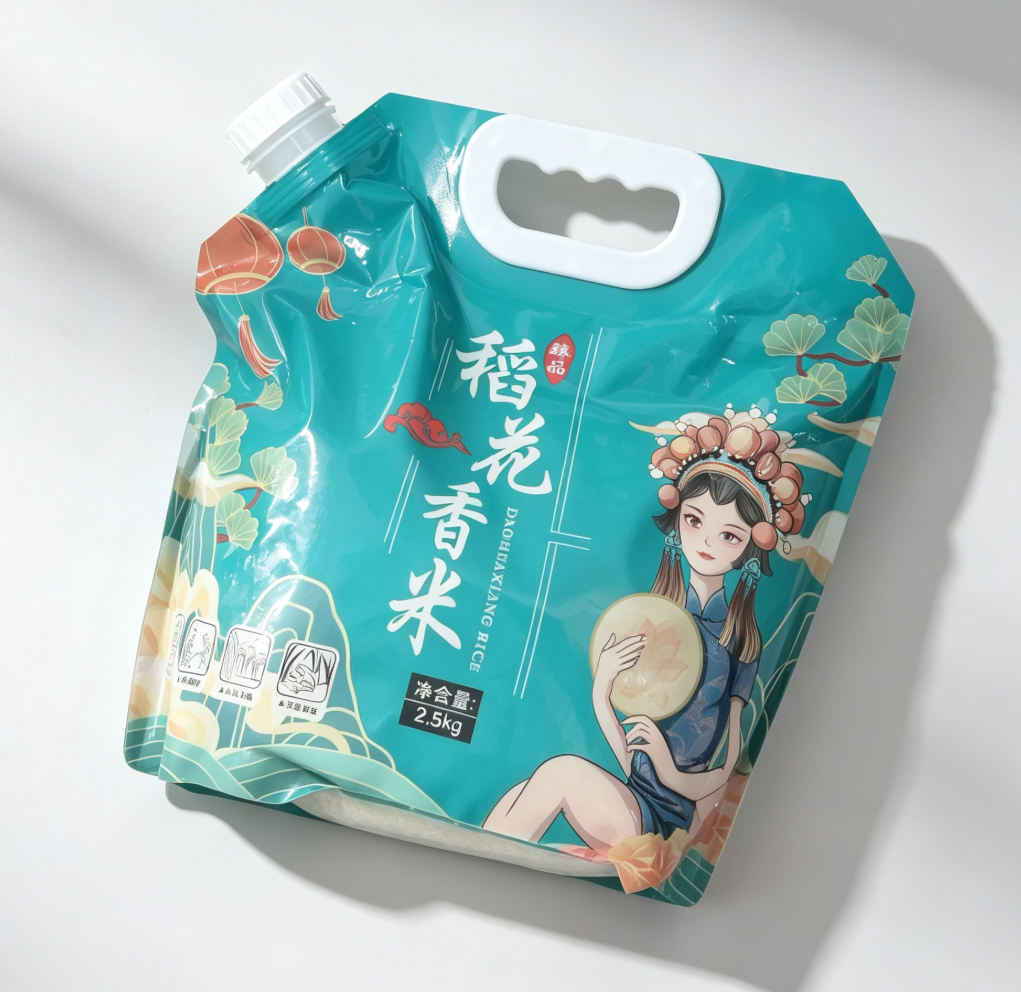
A spout pouch is a flexible bag with a fitted nozzle welded into one corner or the top panel. The body stands upright on a flat base, and the cap unscrews to let the user pour without splashing. Unlike a rigid bottle, most of the weight is the product itself, which is why filling lines and freight costs shrink. Retailers like the format because a pouch drops into a shipper without the dead air that bottles carry, so shelf resets move faster.
These pouches first took off in the baby-food and beverage aisles, but the format has spread well beyond that. A good pouch holds its shape on a shelf, survives a drop, and reseals tightly after the first pour. The supplier usually offers cap styles in several diameters so the same film structure can serve a thick chili paste or a thin juice.
Why Liquids and Sauces Behave Differently in Packaging
Not every fluid is friendly to the same barrier. A watery drink loses nothing to oxygen, yet a tomato sauce loaded with acid and oil will stain, oxidize, and turn flat within weeks if the film is wrong. Viscosity matters too: a pourable dressing needs a wider bore than a honey-based glaze that crawls out slowly.
Heat is the quiet enemy. A sauce filled hot needs a structure that will not delaminate, while a cold-fill product can use lighter films. The factory often asks for the fill temperature, the pH, and the expected shelf life before recommending a laminate, because guessing here ruins an entire batch. A short call with the technical team before tooling saves more money than any negotiation on unit price later.
How the Pouch Is Built Layer by Layer
Most pouches are a laminate, not a single sheet. The outer layer carries print and scuff resistance, often a clear or white PET. The middle is the barrier: aluminum foil or a metallized film blocks light, moisture, and oxygen. The inner sealant layer touches the food and must weld shut under heat and pressure. Getting the gauge right is part science and part experience; too thin and the pouch tents, too thick and the cost climbs for no gain.
A spout is a separate molded part, usually polyethylene or polypropylene, welded through a pre-cut hole. The cap threads on after filling. Getting the weld clean matters more than it sounds; a weak seal around the spout is the most common cause of leaks in the field, and a distributor will not accept a line that drips on the shelf.
Real Applications Across Food and Beverage
Walk any export aisle and you will find spout pouches holding yogurt drinks, purees, cooking wine, soy sauce, and concentrated soup base. Condiment makers like them because a 500 ml pouch ships flatter than a glass bottle and opens a new flavor without a new mold.
Outside the kitchen, the same format carries liquid detergent, hand sanitizer, and pet topper broths. The shape is forgiving: a small stand-up pouch fits a lunchbox, while a two-liter version sits beside a stove. The manufacturer can print the full label on the front and leave the back for recipes or multilingual export text. For seasonal items the pouch also lets a brand test a limited run without committing to a heavy glass or can line.
What Buyers Gain From Switching
The obvious win is freight. Soft packs weigh far less than rigid containers, and a pallet holds more units, so per-unit shipping drops. Warehousing follows the same logic: empty pouches arrive flat and take a fraction of the space that bottles do. Smaller brands feel this first, since they cannot absorb the freight waste that bigger players shrug off.
Less obvious is the sales angle. A matte finish with a clear window reads as premium on a shelf, and the resealable cap cuts waste at home. For a brand building repeat purchase, a pouch that closes cleanly after every use quietly earns loyalty that a torn foil packet never will.
How a Factory Handles Customization and OEM
Customization starts with the structure. The supplier chooses film grades, barrier level, and pouch size from the product's real needs rather than a catalog default. Print comes next: rotogravure or digital, in up to several colors, with matte, gloss, or soft-touch coatings. Texture choices sound minor, yet they change how a shopper's hand reads the pack on a crowded shelf. The supplier must also confirm it can supply the chosen films at steady volume.
OEM work means matching the buyer's spec exactly: cap type, spout placement, hang-hole, and lot coding. A reliable factory keeps artwork records, runs trial seals on the actual product, and adjusts weld time if the first sample weeps. Export orders add one more layer: carton sizing, pallet patterns, and documentation that clear customs without a fight.
Choosing a Supplier for Export and Long-Term Supply
Price is the easy part. The harder questions are consistency and traceability: can the supplier show the same seal strength month after month, and can they prove the films meet food-contact rules in the destination market? Ask for sample pouches filled with your own product and left in heat for a week. A supplier that treats the first sample as a real production run, not a favor, tends to stay in the lineup for years.
Dongguang Xingrui Plastics Co., Ltd. runs this kind of flexible-packaging production as a manufacturer and factory-direct supplier, supporting OEM, customization, and export programs for distributors and brands that need steady, compliant spout pouches at scale.
References
FDA 21 CFR 177. Packaging materials and articles in contact with food; indirect food additives: polymers. U.S. Food and Drug Administration.
EU Regulation (EU) No 10/2011. Plastic materials and articles intended to come into contact with food. European Commission.
ASTM F1929. Standard Test Method for Determining Leakage of Flexible Barrier Packages. ASTM International.